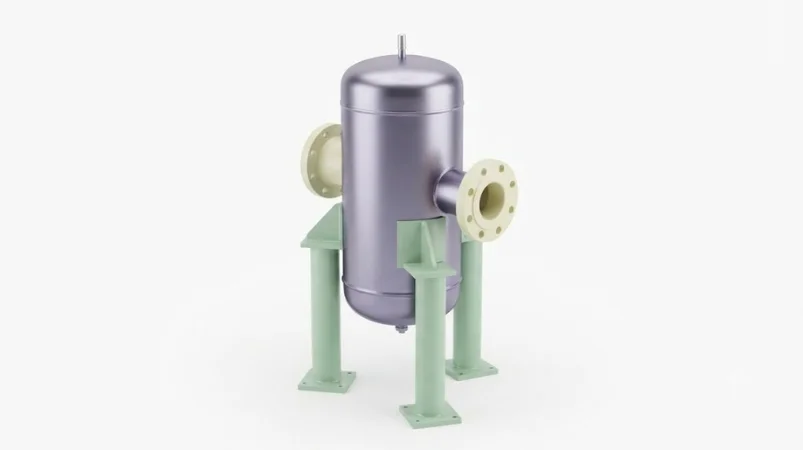
Vessel Support Systems for Vessels in Heating Baths

  • Home
  • Vessel Support Systems for Vessels in Heating Baths

Vessel Support Systems for Vessels in Heating Baths

Vessels placed in heating baths (e.g., oil, water, or silicone baths) require dedicated support frames to ensure stability, safety, and proper thermal management. The support system must secure the vessel above the bath surface, provide alignment, and resist buoyant, thermal, and vibration forces. Proper support frames also facilitate maintenance, instrumentation access, and safe operation in laboratory or pilot-plant environments.

Functional Role of the Support Frame

The vessel support frame for heating baths ensures:

  • Stable positioning of vessels inside the bath
  • Protection against lateral tipping or vibration
  • Safe clearance between vessel and bath fluid
  • Accommodation of thermal expansion and contraction
  • Integration with base and lateral bracing for overall rigidity

These frames are critical for temperature-controlled reactions, where improper vessel support can lead to tipping, uneven heating, or glass stress.

Recommended Minimum Frame Sizes

The following table provides typical minimum structural dimensions for vessel support frames in bath applications:

Vessel Volume (L)

Tube Size NB (mm)

Min. Frame Depth × Width (mm × mm)

20

25

500 × 600

50

25

600 × 800

100

25 / 30

800 × 1000

200

30

800 × 1200

Frame sizes may be adjusted depending on bath type, vessel shape, and operational clearance requirements.

Structural Design Considerations

When designing support systems for vessels in heating baths, key factors include:

Thermal Clearance

  • Maintain gap between vessel and bath walls
  • Avoid direct contact to prevent glass stress and uneven heating

Load & Stability

  • Frame must resist vessel weight plus buoyancy effects
  • Lateral bracing or counterweights may be used for taller setups

Thermal Expansion

  • Glass and metal components expand differently
  • Supports must allow vertical expansion without imposing bending stress

Maintenance Access

  • Design frame to allow removal of vessel, heating mantle, or bath fluid
  • Provide clearance for sensors, stirrers, or thermocouples

Material Selection

  • Galvanized mild steel or stainless steel (SS 304 / 316) for bath-side corrosion resistance
  • PTFE or rubber pads at contact points where needed

Typical Use Cases

  • Laboratory and pilot-scale heating baths
  • Chemical process vessels immersed in oil or water
  • Glass reactors for temperature-controlled reactions
  • Distillation or reflux systems using fluid baths
  • Batch reaction units requiring uniform thermal exposure

Key Advantages

  • Ensures vessel stability in liquid baths
  • Reduces risk of tipping, vibration, or glass stress
  • Supports thermal expansion safely
  • Provides easy access for maintenance and instrumentation
  • Compatible with standard modular glassware and bath sizes

FAQs

1: Can the frame support vessels with irregular shapes?
A1: Yes, frames can be customized to accommodate non-standard vessel geometries with additional supports or inserts.

2: What materials are best for heating bath frames?
A2: Stainless steel (SS 304/316) is ideal for corrosion resistance, while galvanized steel is cost-effective for standard applications.

3: Are these frames suitable for vacuum vessels?
A3: Yes, if the frame is designed to maintain alignment without imposing lateral or axial stress on the glass.

4: Can these frames be used with multiple vessels in one bath?
A4: Yes, frames can be designed modularly to support multiple vessels safely.

Related Products

Vessel Support Systems for Vessels in Vessel Holders

View Details

Vessel Support Systems for Vessels in Heating Mantles

View Details

Vessel Support Systems for Vessels in Heating Baths

View Details