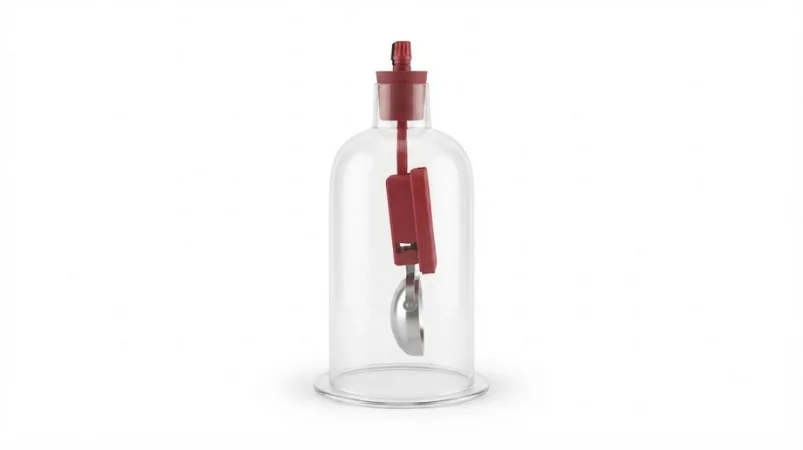
Bell Jars are transparent borosilicate glass domes used to enclose objects under low-pressure conditions or controlled atmospheres. Sitting over a base plate with a ground glass flange, these jars are ideal for vacuum experiments, demonstrations, and protective containment in academic, research, and industrial labs.
They can also serve as protective domes for sensitive instruments, sensors, or specimens and are used for teaching, display, or museum purposes. Custom options such as side ports, viewing windows, or thicker walls are available to accommodate specific lab requirements.
Technical Specifications
|
Parameter |
Specification |
|
Material |
Borosilicate Glass 3.3 |
|
Temperature Range |
Ambient to ~120–150 °C |
|
Operating Pressure |
Low vacuum (modest pressure reductions), not for high vacuum or high positive pressure |
|
Diameter |
100 mm – 500 mm or more (customizable) |
|
Height |
Varies with diameter and model |
|
Flange Type |
Ground glass base flange for sealing to base plates |
|
Seal Method |
Ground flange with vacuum grease or O-ring for low vacuum |
|
Optional Features |
Side ports, viewing windows, thicker walls for stress reduction |
|
Use Limitations |
Not suitable for deep vacuum or high mechanical stress |
Key Features
Applications
Frequently Asked Questions (FAQ)
Q1. Can bell jars be used for high vacuum?
No. These are designed for low to modest vacuum applications; high vacuum may stress the glass.
Q2. Are they compatible with chemical reagents?
Yes, borosilicate glass 3.3 is chemically resistant to most laboratory chemicals.
Q3. Can custom sizes or ports be added?
Yes, side ports, viewing windows, thicker walls, and larger diameters are available upon request.
Q4. How is the vacuum seal achieved?
Through a ground glass base flange, typically using vacuum grease or an O-ring for low-pressure experiments.
Why Choose Our Bell Jars?