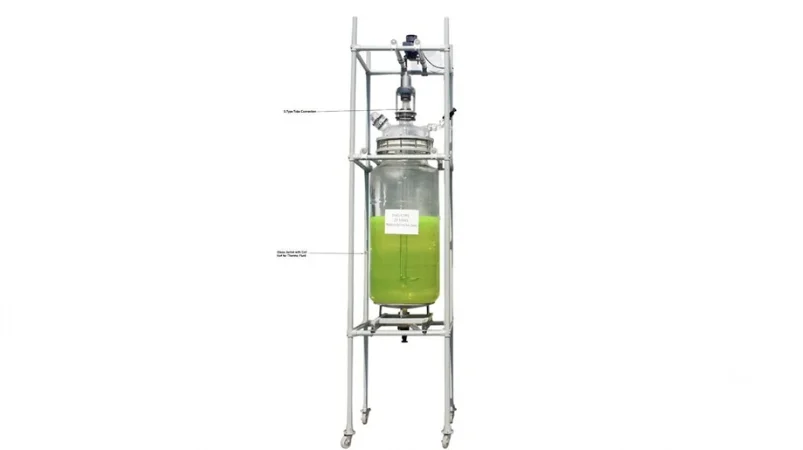
Advanced Glass Absorption System for Hydrogen Chloride (HCl) Gas Recovery
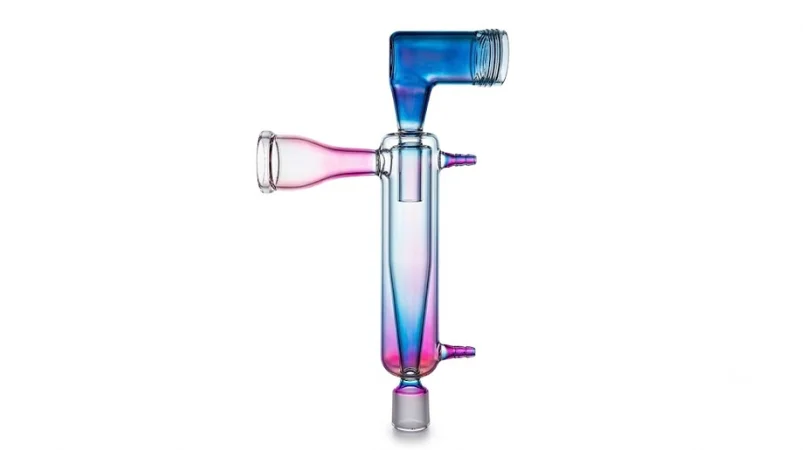
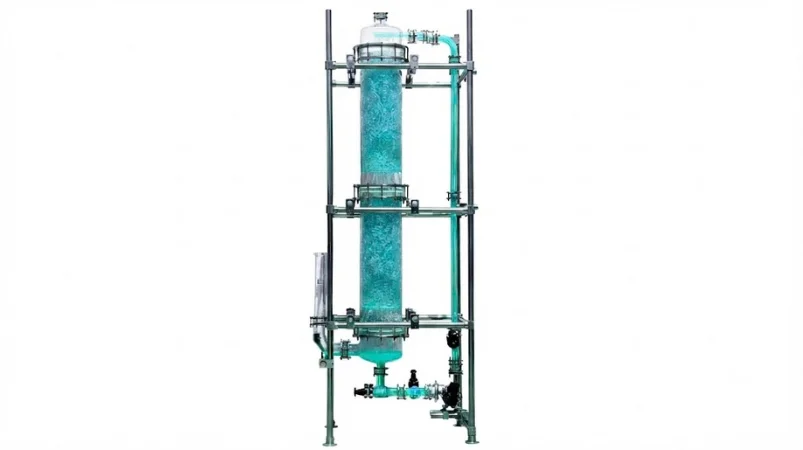
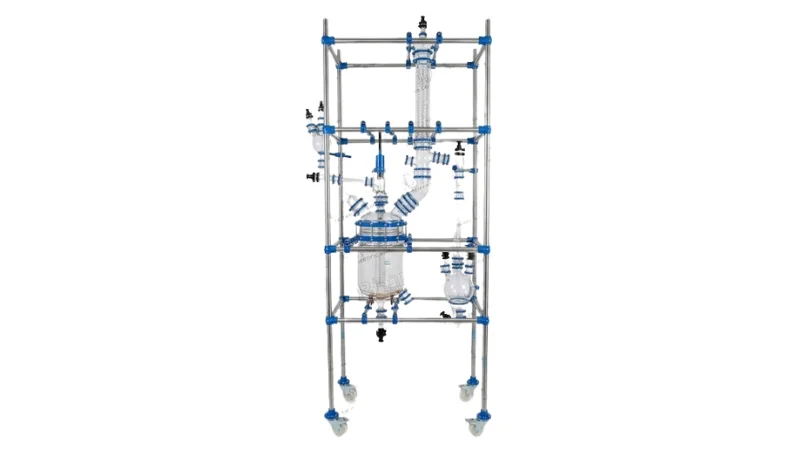
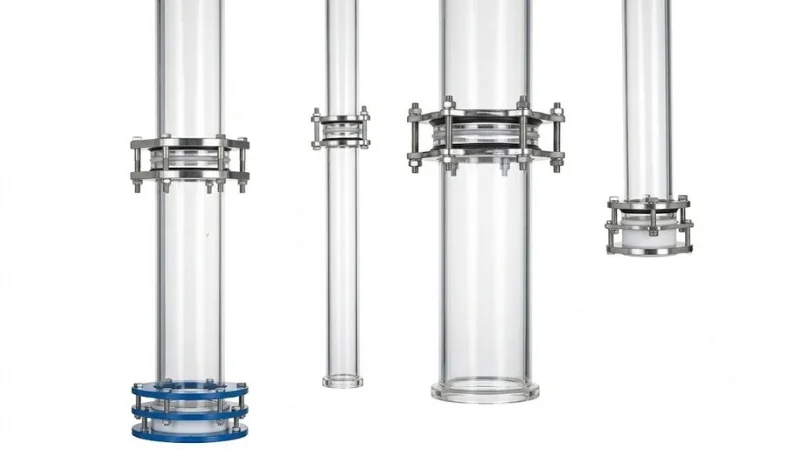
The HCL Adiabatic Absorption Enhanced system is designed for efficient scrubbing and recovery of hydrogen chloride (HCl) gas in industrial and laboratory settings. Utilizing adiabatic absorption principles, this system maximizes gas-liquid contact, improves absorption efficiency, and ensures chemical safety. Engineered with borosilicate glass 3.3 and compatible PTFE components, it combines transparency, corrosion resistance, and operational reliability for both pilot-scale and small industrial applications.
Product Overview
Technical Specifications
|
Parameter |
Specification |
|
Material |
Borosilicate Glass 3.3, PTFE seals |
|
Gas Type |
Hydrogen Chloride (HCl) |
|
Operating Temp |
Up to 150°C |
|
Operating Pressure |
Atmospheric to mild vacuum |
|
Absorption Efficiency |
Up to 95% (process-dependent) |
|
Capacity |
Pilot-scale or small industrial scale |
|
Connections |
Standard glass joints (24/40, 29/32, 34/35) |
|
Modular Design |
Yes – easy assembly, cleaning, and maintenance |
Key Features & Benefits
Applications
Frequently Asked Questions (FAQs)
Q1: Can this system be scaled for larger industrial processes?
Yes, the modular design allows scaling from pilot setups to small industrial units. Custom sizing is available.
Q2: Is it compatible with other corrosive gases?
Primarily designed for HCl, but compatible with other acidic or corrosive gases depending on concentration and temperature.
Q3: What maintenance is required?
Routine inspection of joints, seals, and condensers, along with cleaning of glass surfaces. PTFE seals should be checked periodically for wear.
Q4: Can it operate under vacuum conditions?
Yes, the system can handle mild vacuum levels, but is not designed for deep vacuum operations.
Q5: Are replacement parts available?
Yes, all glass joints, PTFE seals, and support clamps can be supplied individually.