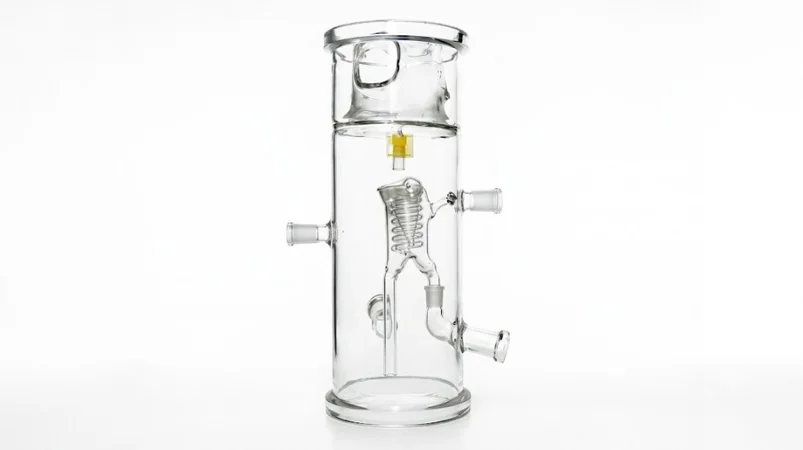
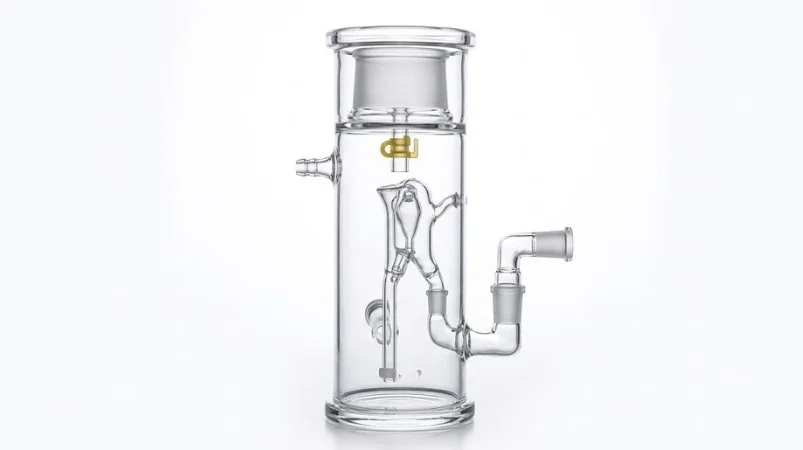
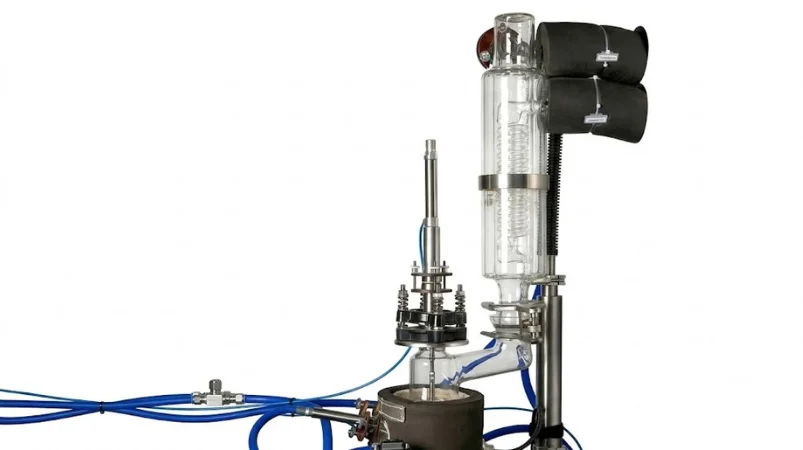
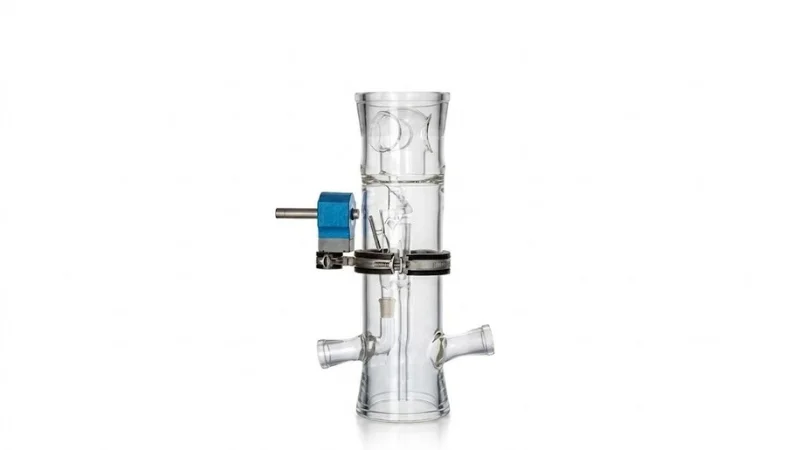
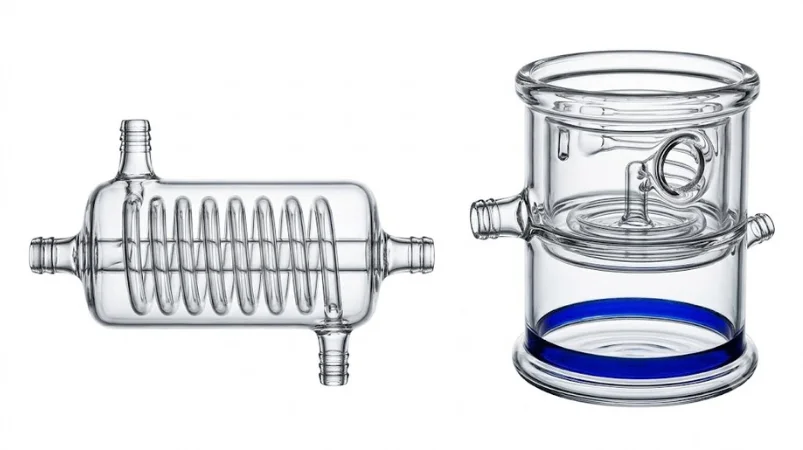
The Pneumatic Reflux Divider is a high-performance glass component designed for automated control of reflux ratios in distillation columns. Unlike manual or electro-magnetic dividers, this type uses pneumatic actuation to open and close the reflux funnel, allowing rapid and precise control of the reflux stream.
Constructed from borosilicate glass 3.3, it provides excellent chemical resistance, thermal stability, and durability, making it ideal for laboratory, pilot, and industrial-scale operations. Liquid seals prevent vapour bypass, ensuring accurate distillate collection and consistent separation performance.
Key Features & Benefits
Technical Specifications
|
Cat. Ref |
DN |
DN1 |
DN2 |
L (mm) |
L1 (mm) |
Free Cross Sec. cm² |
Max Product L/hr |
|
RDP3 |
80 |
25 |
25 |
400 |
100 |
20 |
120 |
|
RDP4 |
100 |
25 |
25 |
425 |
125 |
50 |
250 |
|
RDP6 |
150 |
25 |
25 |
475 |
150 |
100 |
400 |
|
RDP9 |
225 |
25 |
25 |
550 |
175 |
150 |
650 |
|
RDP12 |
300 |
25 |
25 |
725 |
200 |
250 |
900 |
|
RDP16 |
400 |
40 |
40 |
825 |
225 |
350 |
1200 |
|
RDP18 |
450 |
40 |
40 |
925 |
250 |
500 |
1500 |
Items marked for fast delivery available
How It Works
Applications
Why Choose Pneumatic Reflux Dividers?
FAQs
Q1: How is this different from an electro-magnetically operated reflux divider?
A: The pneumatic reflux divider uses compressed air for actuation, allowing faster response and continuous automatic control, while the electro-magnetic version relies on electromagnet movement.
Q2: Is a liquid seal required?
A: Yes, it ensures vapour does not bypass, maintaining accurate reflux ratios.
Q3: Can this be used in industrial-scale columns?
A: Absolutely, it is suitable for lab, pilot, and industrial distillation systems.
Q4: Can the actuator be automated?
A: Yes, the pneumatic actuator can be integrated with timers or process controllers for fully automated operation.