Coil Condenser

  • Home
  • Coil Condenser

Coil Condenser

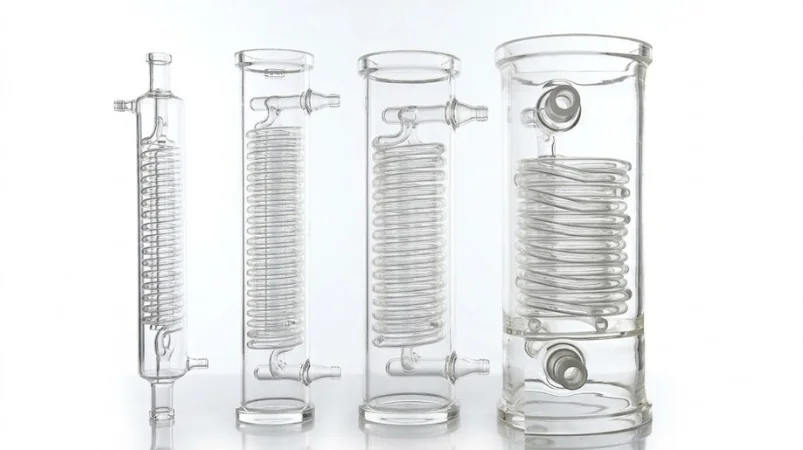
Glass Coil Condensers are high-efficiency heat exchange devices designed for condensation of vapors and cooling of process fluids in chemical, pharmaceutical, and distillation systems. They utilize multiple parallel borosilicate glass coils fused within a glass shell, ensuring excellent heat transfer performance combined with superior chemical resistance.

A coil condenser is a specialized form of glass heat exchanger where vapors or hot fluids flow through or around a compact coil matrix, while a cooling medium circulates on the opposite side. The coil geometry maximizes surface area within a limited footprint, making it ideal for installations where space optimization is critical.

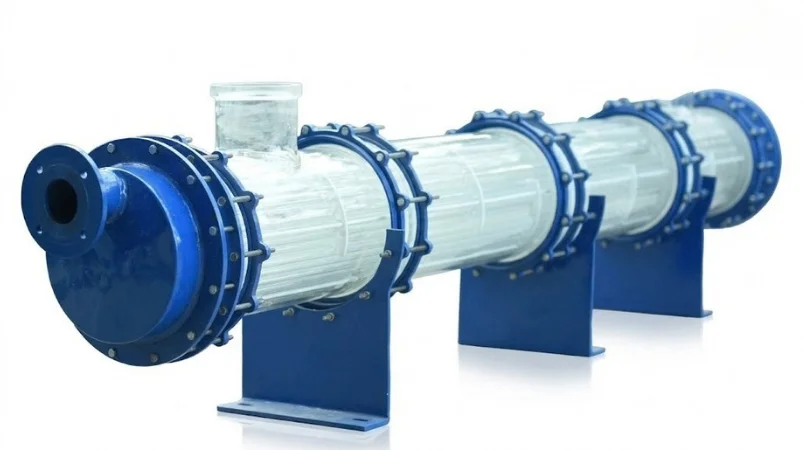
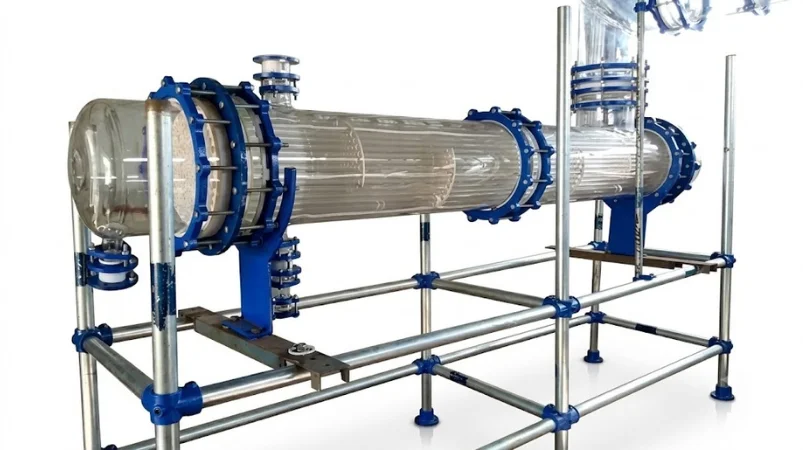
In industrial glass equipment ranges (such as Goel / Goel Equipments-style systems), coil condensers are one of the two primary exchanger designs, the other being shell & tube heat exchangers.

Construction & Design

  • Coil Construction
    Multiple parallel helical glass coils are precisely formed and fused to create the condenser core, ensuring uniform heat transfer and mechanical integrity.
  • Shell Design
    A borosilicate glass shell houses the coil assembly, allowing controlled flow of the cooling or condensing medium while enabling full visual inspection.

Material of Construction

  • Wetted parts: Borosilicate Glass 3.3
  • High resistance to acids, solvents, alkalis, and corrosive vapors
  • Smooth internal surfaces to minimize fouling and scaling

Working Principle

  • Hot vapor enters the condenser inlet
  • Cooling medium circulates through or around the coil assembly
  • Heat is transferred through the glass coil wall
  • Vapor condenses into liquid
  • Condensate exits via the outlet, while cooling medium is discharged separately

Key Features

  • Compact coil geometry for high heat transfer efficiency
  • Excellent condensation performance
  • Non-corrosive glass construction
  • Suitable for aggressive and high-purity processes
  • Clear glass allows visual monitoring of condensation
  • Modular and customizable coil configurations

Design Considerations

Coil condensers are engineered based on:

  • Required heat duty
  • Vapor and coolant flow rates
  • Allowable pressure drop
  • Operating temperature and pressure limits
  • Coil diameter, number of coils, shell length, and shell diameter

Due to varying process conditions, dimensions and thermal performance are generally customized per project.

Applications

  • Vapor condensation in distillation columns
  • Pharmaceutical and API manufacturing
  • Chemical processing plants
  • Solvent recovery systems
  • Pilot plants and R&D laboratories

Typical Uses

  • Condensation of solvent vapors
  • Reflux condensation
  • Cooling of hot process streams
  • Compact condenser installations

Advantages of Coil Condensers

  • Cost-effective alternative to metal and graphite condensers
  • Ideal for corrosive and reactive media
  • Easy inspection due to transparent construction
  • Low maintenance and easy cleaning
  • Space-saving design for compact installations

Related Products

Shell and Tube Heat Exchanger

View Details

Coil Condenser

View Details

Glass Shell and Tube Heat Exchangers

View Details

Coil Type Heat Exchangers

View Details