Liquid Coolers

  • Home
  • Liquid Coolers

Liquid Coolers

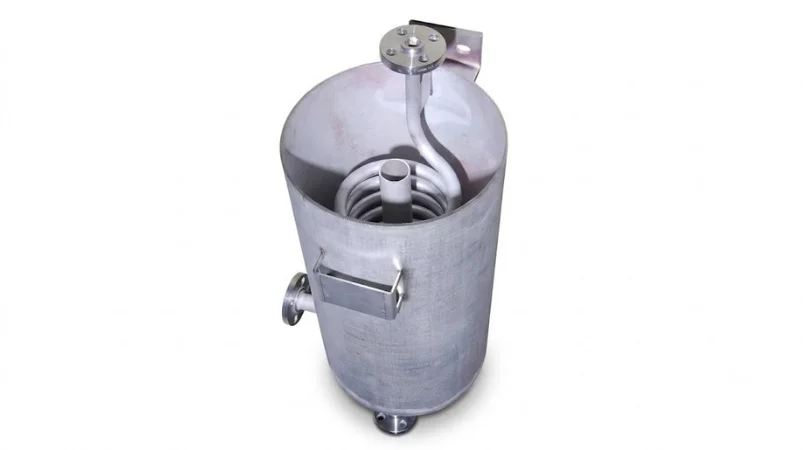
Liquid Coolers are glass heat transfer devices designed to remove heat from process liquids using an external cooling medium such as chilled water, cooling water, or glycol solutions. Manufactured from borosilicate glass 3.3, they provide excellent corrosion resistance, thermal stability, and contamination-free cooling, making them suitable for chemical, pharmaceutical, and laboratory applications.

Working Principle

  • The process liquid flows through the glass coil or tube path
  • A cooling medium circulates on the opposite side
  • Heat is transferred through glass walls by conduction
  • The cooled liquid exits at a controlled temperature, maintaining process stability

Construction & Design

  • Borosilicate glass coils / tubes for wetted parts
  • Smooth internal surfaces to minimize fouling
  • Jointless construction for leak-free performance
  • Compact design offering high heat transfer area (HTA)
  • Designed for low pressure drop and uniform cooling

Design Variants

  • Coil-type liquid coolers
  • Shell & coil glass coolers
  • Immersion-type coolers
  • Inline cooling sections (custom engineered)

Key Features

  • High cooling efficiency
  • Universal corrosion resistance
  • No metal ion contamination
  • Visual monitoring of flow & fouling
  • Compact and lightweight
  • Easy cleaning and maintenance

Technical Specifications (Typical)

Parameter

Specification

Material

Borosilicate Glass 3.3

Cooling Medium

Chilled water / Cooling water / Brine / Glycol

Operating Temperature

Up to 250 °C (process dependent)

Operating Pressure

Low pressure / Near atmospheric

Heat Transfer Type

Indirect (glass wall conduction)

Installation

Vertical / Horizontal

Connection Type

Ground joint / Flanged

Applications

  • Cooling of reaction mixtures
  • Solvent cooling systems
  • Pharmaceutical process cooling
  • Distillation product cooling
  • Heat removal in batch and continuous processes
  • Laboratory and pilot plant operations

Operational Advantages

  • Eliminates corrosion issues seen in metal coolers
  • Prevents cross-contamination
  • Suitable for aggressive and acidic media
  • Stable operation under thermal cycling

Maintenance & Service

  • Easy dismantling and reinstallation
  • Visual inspection through transparent glass
  • Simple cleaning with standard solvents or CIP
  • Long operational life with minimal wear

Optional Accessories

  • Temperature pockets
  • Support frames & clamps
  • Flow control valves
  • Liquid seals
  • Integration with control panels & sensors

Customization Options

  • Liquid Coolers can be custom-designed based on:
  • Required cooling duty
  • Flow rate and viscosity of liquid
  • Available cooling medium
  • Space constraints
  • Process temperature limits

Industries Served

  • Chemical processing
  • Pharmaceutical manufacturing
  • Petrochemical laboratories
  • Specialty chemicals
  • R&D and pilot plants

Related Products

Coil Type Boilers

View Details

Vent Condensers

View Details

Liquid Coolers

View Details

Immersion Heat Exchangers

View Details