Reaction Unit

  • Home
  • Reaction Unit

Reaction Unit

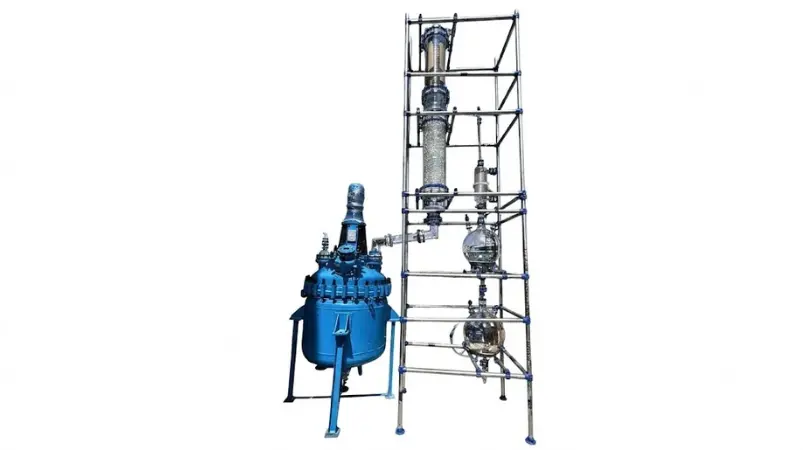
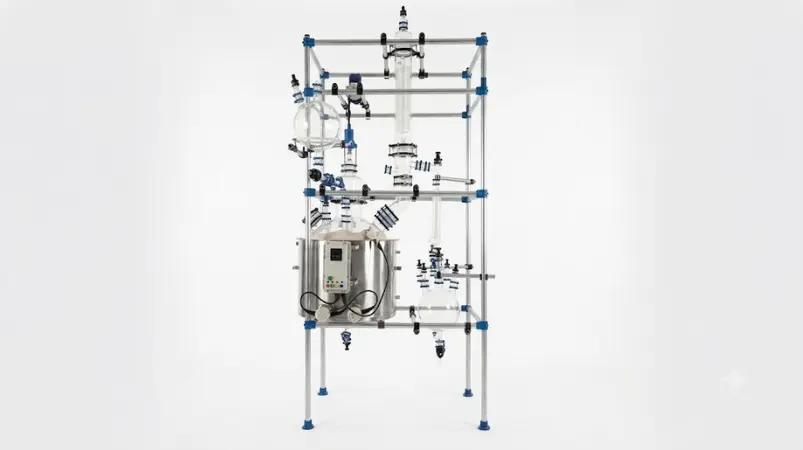
The Reaction Unit is a complete, modular stirred reactor system engineered for controlled chemical synthesis, reaction development, and pilot-scale process optimization. Designed as a core component of standard industrial glass units, this system supports atmospheric, vacuum, and inert gas operations with optional reflux integration.

Constructed from high-quality borosilicate glass, the Reaction Unit delivers chemical resistance, thermal stability, and full process visibility, making it an ideal solution for R&D labs, pilot plants, and specialty chemical production environments.

How the Reaction Unit Works – Step-by-Step Process

  •        Reactants are charged into the borosilicate glass reaction vessel
  •        Controlled heating or cooling is applied using external utilities
  •        A variable-speed stirrer ensures uniform mixing and heat transfer
  •        Vapors generated (if any) are condensed via an optional reflux condenser
  •        Reagents can be added or withdrawn through dedicated ports
  •        Reaction proceeds under atmospheric pressure, vacuum, or inert gas
  •        Product is sampled or discharged through bottom outlet or drain valve

This design enables safe, repeatable, and scalable reaction control.

Construction & Materials

  •  Main Reactor Body: Borosilicate Glass (3.3)
  •  Seals & Gaskets: PTFE (chemical resistant)
  •  Support Structure: Stainless Steel Framework
  •  Stirrer Shaft: Glass / PTFE-coated / Mechanical seal option
  •  Connections: Standard glass joints & industrial flanges

Technical Specifications

Parameter

Details

Capacity Range

Tens to Hundreds of Liters (Catalog Sizes)

Operating Pressure

Atmospheric, Vacuum, Slight Positive Pressure

Temperature Range

–50°C to +200°C

Stirring System

Variable Speed Mechanical Drive

Coupling Type

Magnetic or Mechanical Coupling

Configuration

Reaction Vessel with Reflux Condenser

Ports

Feed, Sampling, Withdrawal, Utility Ports

Utilities

Heating / Cooling Media, Vacuum, Inert Gas

 Key Features & Benefits

  1.  Complete reaction setup in a single modular unit
  2.  Transparent glass construction for real-time observation
  3.  Precise temperature & mixing control
  4.  Reflux-assisted reaction capability
  5.  Easy integration with distillation & purification systems
  6.  Flexible configuration for multi-step reactions
  7.  Safe handling of reactive & corrosive chemicals

Safety & Operating Advantages

  •  PTFE sealing for leak-free operation
  •  Full visibility to monitor reaction behavior
  •  Controlled heating & cooling
  •  Stable mechanical stirring system
  •  Inert gas purging compatibility
  •  Easy cleaning & maintenance

Designed for safe, continuous, and controlled reaction execution.

Applications of Reaction Unit

  •  Routine chemical synthesis
  •  Laboratory experimentation
  •  Reflux-assisted reaction sequences
  •  Pilot-scale kinetic & mechanistic studies
  •  Multi-step chemical reactions
  •  Integration with distillation or downstream purification
  •  Process development & scale-up validation

Industries We Serve

 Pharmaceutical Industry

  • API synthesis
  • Intermediate production
  • Process optimization
  • Reaction development

 Chemical & Specialty Chemicals

  • Fine chemical synthesis
  • Batch reaction processing
  • Controlled addition reactions

 R&D & Pilot Plants

  • Reaction kinetics studies
  • Mechanism development
  • Technology transfer

Optional Accessories & Customization

(Standardized modular accessories – Add / Remove / Mix & Match)

  •  Heating mantles / oil baths
  •  Chillers & circulation systems
  •  Reflux condenser assemblies
  •  Addition funnels & dosing vessels
  •  Sampling systems
  •  Mechanical or magnetic stirrer options
  •  Vacuum system with trap
  •  Inert gas purging setup
  •  Digital temperature & RPM indicators
  • PLC / automation readiness

Frequently Asked Questions (FAQs)

Q1. Can the Reaction Unit operate under vacuum?
Yes, it supports vacuum, atmospheric, and inert gas operation.

Q2. What materials are used for wetted parts?
Borosilicate glass and PTFE, ensuring high chemical resistance.

Q3. Can this unit be integrated with a distillation system?
Yes, it is fully modular and compatible with downstream units.

Q4. Is temperature control precise?
Yes, compatible with heating, cooling, and cryogenic systems.

Q5. What capacities are available?
Standard sizes range from tens to hundreds of liters.

Why Choose Our Reaction Unit?

  • Industrial-grade design
  • High chemical purity
  • Modular & expandable
  • Excellent process visibility
  • Easy integration with other glass units
  • Trusted by chemical & pharma industries

Related Products

Glass Reactor Systems

View Details

Glass Lined Reactor Assembly

View Details

Reaction Unit

View Details