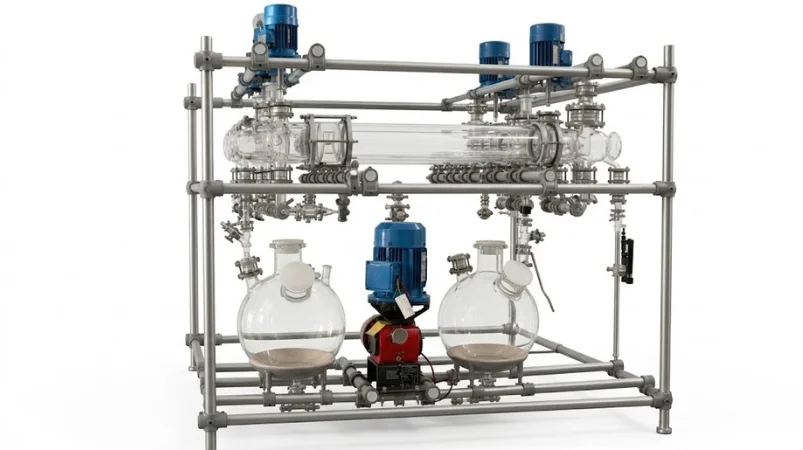
Glass Absorber Systems are specialized industrial process equipment designed for gas absorption, scrubbing, and liquid-gas reaction processes. They are widely used in chemical, pharmaceutical, and environmental industries for capturing and converting gases into liquids or for removing harmful components from exhaust streams.
Glass Absorber Systems utilize borosilicate glass construction to provide chemical resistance, transparency, and ease of monitoring. The system typically involves a gas inlet, a liquid distribution system, a packed absorption column, and a liquid collection outlet. The glass construction allows direct visual observation of the process, making it ideal for research, pilot plants, and production setups.
Key Design Features:
Applications
Benefits of Glass Absorber Systems
Technical Highlights
Frequently Asked Questions (FAQs)
Q1: What is a Glass Absorber System used for?
A: It is used for absorbing gases into liquids, scrubbing toxic fumes, and chemical reactions in pilot or industrial setups.
Q2: Why choose glass over metal absorbers?
A: Borosilicate glass is chemically inert, allows visual observation, and reduces contamination or corrosion.
Q3: Can the system handle strong acids and corrosive gases?
A: Yes, the glass and PTFE construction makes it suitable for highly corrosive chemicals.
Q4: Is the system scalable for industrial use?
A: Yes, it is modular, allowing easy scale-up from lab-scale pilot plants to full production units.
Q5: What maintenance is required?
A: Minimal maintenance is needed; smooth glass surfaces reduce fouling, and modular parts allow easy cleaning and inspection.
Glass Absorber Systems are an efficient, reliable, and visually intuitive solution for chemical absorption, scrubbing, and gas-liquid reactions. They combine high chemical resistance, modular scalability, and ease of operation, making them ideal for laboratory, pilot, and industrial-scale applications.