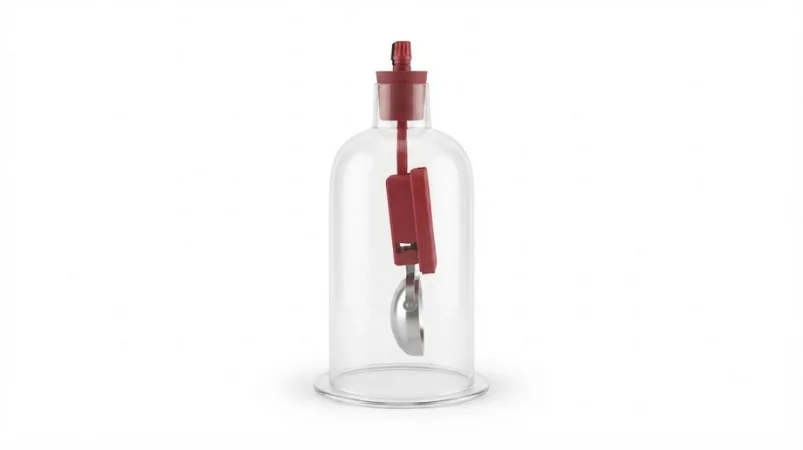
Desiccators are specialized laboratory glassware designed to store moisture-sensitive materials and perform controlled drying under ambient or vacuum conditions. Constructed from borosilicate glass 3.3, these desiccators provide excellent chemical resistance, thermal stability, and transparency for easy observation.
Available in standard and vacuum-capable models, they feature precision-ground flanges, PTFE spindles or stopcocks (for vacuum models), and knob tops (for standard models), ensuring airtight sealing and reliable operation. Ideal for chemical, pharmaceutical, biological, and analytical laboratories, desiccators protect samples from ambient humidity, moisture ingress, and contamination.
Technical Specifications
|
Parameter |
Specification |
|
Material |
Borosilicate Glass 3.3 |
|
Operating Temperature |
–50 °C to +200 °C (typical for lab use) |
|
Vacuum Rating |
Suitable for mild lab vacuum (~tens of mbar) |
|
Models |
Standard (knob top), Vacuum (PTFE spindle/stopcock) |
|
Sizes / Inner Diameters |
100 mm, 150 mm, 200 mm, 250 mm, 300 mm |
|
Flange Type |
Standard ground glass flanges for tight sealing |
|
Sealing Surface |
Precision-ground for leak minimization |
|
Optional |
Interchangeable joints, spare parts (flange, spindles) |
|
Capacity |
Varies by diameter & height, lab-scale |
Key Features
Applications
Frequently Asked Questions (FAQ)
Q1. Can desiccators be used under vacuum?
Yes, vacuum models with PTFE spindles or stopcocks are designed for mild lab vacuum levels (~tens of mbar).
Q2. Are they compatible with chemical reagents?
Yes, the borosilicate glass 3.3 body and PTFE components are highly resistant to most laboratory chemicals.
Q3. Can I replace the flanges or spindles?
Absolutely. Interchangeable parts are available for standard maintenance and customization.
Q4. Are custom sizes available?
Yes, custom inner diameters, heights, and joint configurations can be fabricated per laboratory requirements.
Why Choose Our Desiccators?