Bromine Recovery Plants

  • Home
  • Bromine Recovery Plants

Bromine Recovery Plants

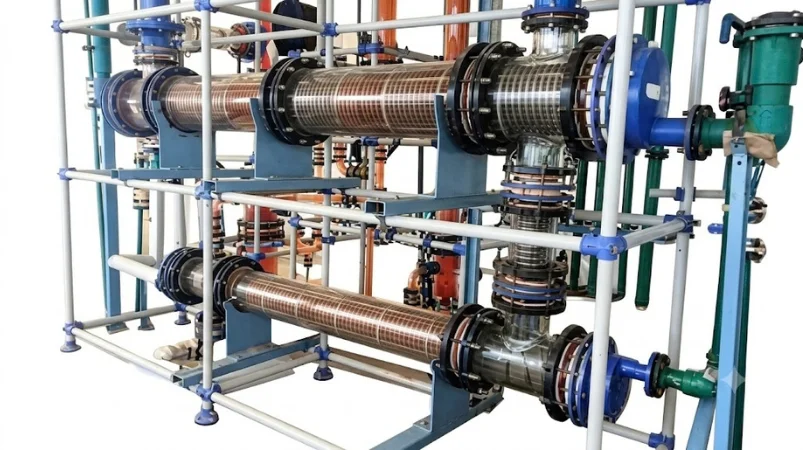
Bromine Recovery Plants are engineered systems designed to recover elemental bromine (Br?) from bromide-containing streams such as industrial waste liquors, reaction residues, salt bitterns, and spent process solutions. Bromine, being a highly reactive and valuable halogen, is widely used in pharmaceuticals, agrochemicals, dyes, flame retardants, and specialty chemicals.

During bromination reactions, only 40–50% of added bromine is consumed, while the remaining bromine exits the process as bromide salts. Bromine Recovery Plants enable efficient conversion of these bromides back into reusable bromine, improving process economics and environmental compliance.

Bromide Feed Sources

Bromine can be recovered from various bromide forms such as:

  • Sodium Bromide (NaBr)
  • Potassium Bromide (KBr)
  • Hydrogen Bromide (HBr)
  • Magnesium Bromide (Sea Bitterns)
  • Spent reaction liquors and effluents

Process Description

The bromine recovery process typically involves oxidation, stripping, condensation, and purification.

Typical process steps:

  1. Oxidation of bromide ions using chlorine
  2. Formation of elemental bromine vapors
  3. Air or steam stripping of bromine
  4. Condensation in glass condensers
  5. Phase separation of liquid bromine
  6. Optional distillation to achieve high purity

Both cold process (for dilute feeds) and hot / steam distillation processes (for concentrated feeds) are offered depending on bromide strength.

Salient Features

  • Zero bromine vapor loss to atmosphere
  • Bromine recovery ≥ 90%
  • Product purity up to 99.50%
  • Optimized chlorine consumption
  • Continuous and stable plant operation
  • Designed for corrosive and hazardous service
  • Modular construction for easy capacity expansion

Technical Specifications

Parameter

Specification

Feed Type

NaBr, KBr, HBr, Sea Bitterns

Bromide Concentration

2 – 300 g/L

Process Type

Cold / Hot (Steam Distillation)

Recovery Efficiency

≥ 90%

Product Purity

Up to 99.50%

Chlorine Consumption

0.3 – 0.6 kg/kg Br?

Plant Capacity

1 TPD to 3 TPD (customizable)

Operating Mode

Continuous

Materials of Construction

Borosilicate glass 3.3, PTFE

Utilities Required

Steam, cooling water, chlorine

Plant Configurations Available

  • Bromine Recovery from Bromides
  • Bromine Recovery from Sea Bitterns
  • Integrated Bromine Distillation Units
  • Tail-gas Bromine Scrubbing Systems
  • Closed-loop zero-emission designs

Applications

  • Dyestuff and pigment industries
  • Pharmaceutical & bulk drug manufacturing
  • Agrochemical production
  • Flame retardant manufacturing
  • Specialty chemical plants
  • Waste bromide recycling units

Key Benefits

  • Converts waste bromides into valuable bromine
  • Reduces raw material costs significantly
  • Improves process sustainability
  • Prevents bromine emissions and corrosion damage
  • Enables regulatory compliance
  • High ROI for bromination-based industries

Why Choose Our Bromine Recovery Plants?

  • Proven expertise in halogen recovery systems
  • Fully glass-based corrosion-resistant construction
  • Custom-designed plants based on feed composition
  • Safe handling of toxic and reactive bromine
  • Turnkey solutions including scrubbing & purification

FAQs – Bromine Recovery Plants

Q1. Can bromine be recovered from any bromide stream?
Yes, most inorganic and process-derived bromides can be processed with proper system selection.

Q2. Is bromine recovery economically viable?
Absolutely. Recovery significantly reduces bromine purchase costs and waste disposal expenses.

Q3. How is bromine emission controlled?
The plant includes condensers, separators, and tail-gas scrubbers ensuring zero emissions.

Q4. Can purity be increased beyond crude bromine?
Yes, integrated distillation units can achieve 99.50% purity bromine.

Sub-pages like Bromine Recovery from Bromides and Bromine Recovery from Sea Bitterns can be expanded individually with full technical layouts.

Related Products

Bromine Recovery Plants

View Details

Bromine Recovery from Sea Bitterns

View Details

Bromine Recovery from Bromides

View Details